




Transport Solutions for Drones in Defence
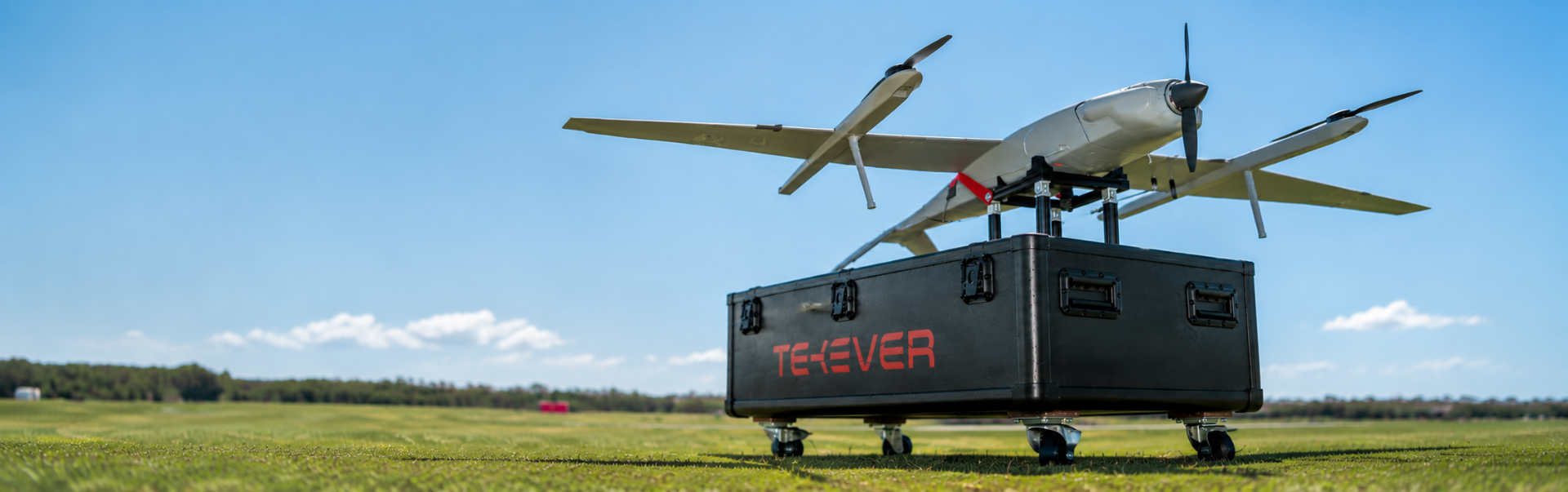
A professional drone system consists of much more than just the drone itself. In addition to the platform, batteries, controllers, cameras, sensors, antennas, spare parts, charging equipment and other mission-critical components often need to be transported safely.
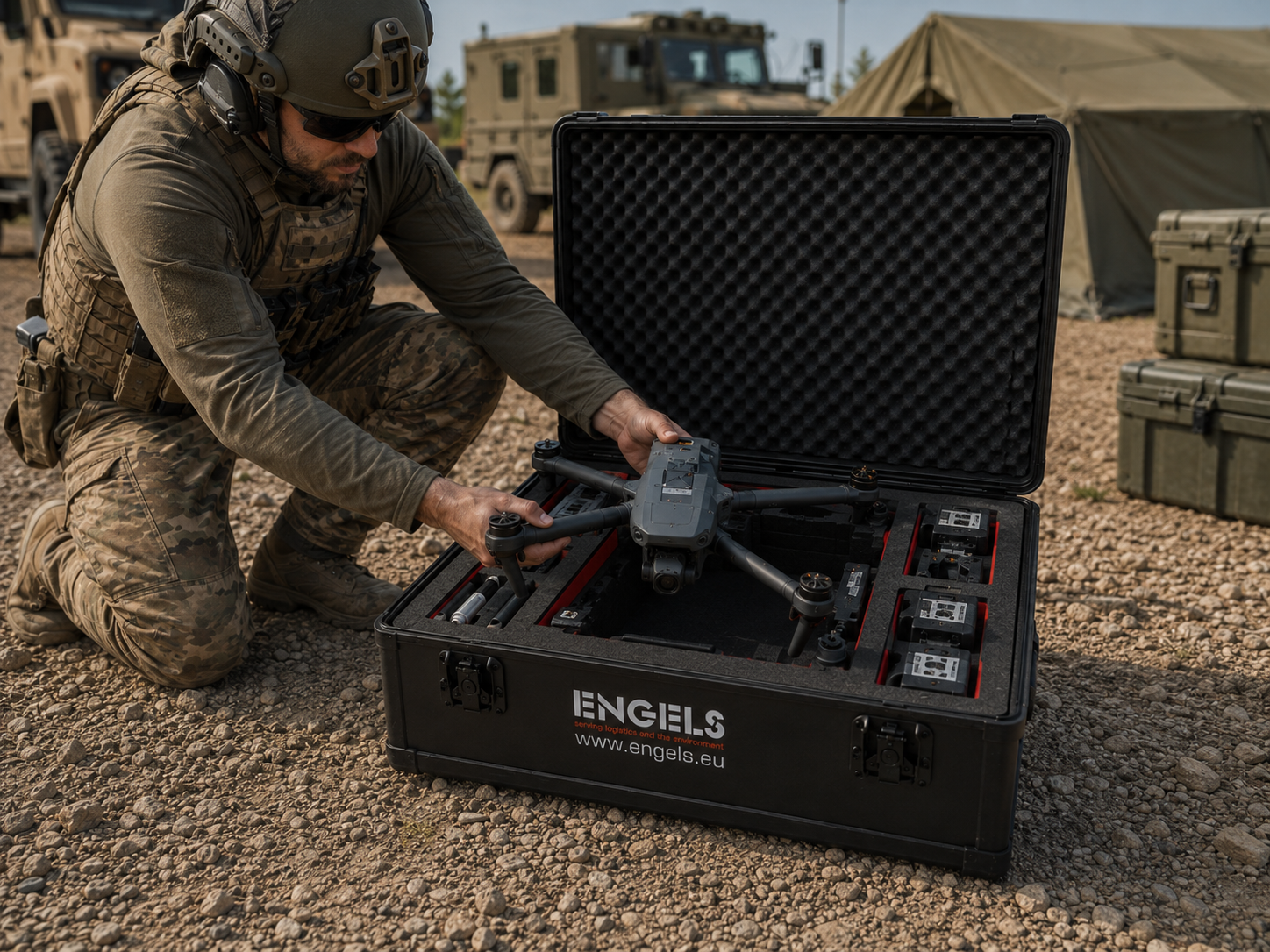
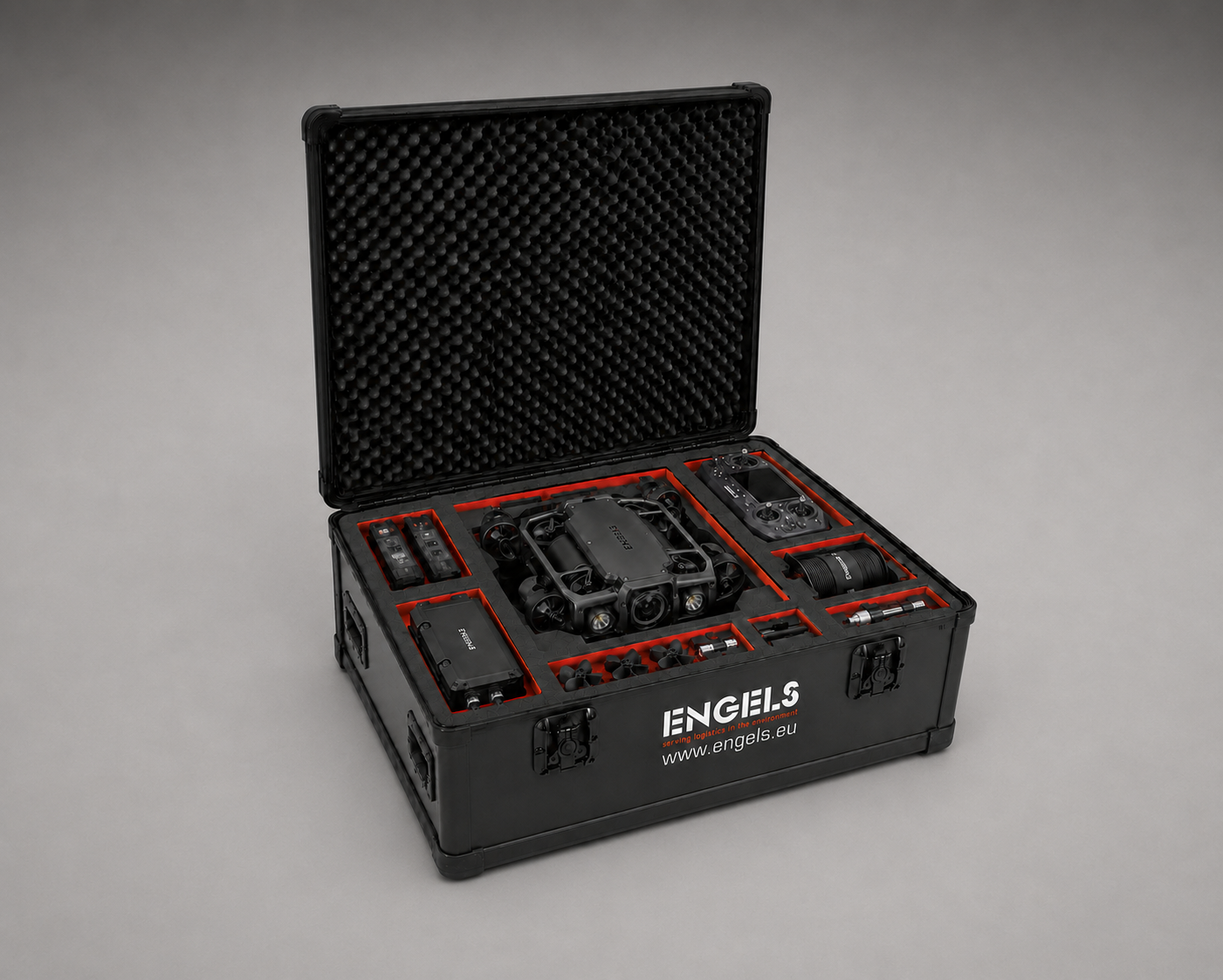
A foam interior tailored to the drone, combined with a custom-made EXOcase™ from Engels, which is six times stronger than a traditional flight case, ensures that the complete drone system is fully protected in a single, organised transport solution. Each component has its own dedicated position within the CNC-machined foam interior, ensuring the equipment remains optimally protected during transport and is immediately accessible on site.
Why Standard Flight Cases Often Fall Short for Drones
Drones are far more than lightweight airframes with propellers. Modern systems incorporate sensitive sensors, cameras, LiDAR systems, GPS antennas, batteries, transmitters and often valuable payloads. During transport, shocks, vibrations, moisture and dust can cause damage that may only become apparent during a mission or inspection.
As a result, an increasing number of drone manufacturers, defence organisations and OEM suppliers are choosing custom transport solutions that enable both the drone system and its accessories to be transported safely and in an organised manner. Engels provides protection for complete UAV systems, ground control stations, batteries, spare parts, antennas, cameras and maintenance equipment.
Drone Transport Solutions for Air, Land and Maritime Systems
Drones are playing an increasingly important role in defence, inspection, infrastructure, offshore operations, public safety and industrial applications. They are increasingly supplied as complete systems with batteries, payloads, controllers, chargers, antennas and spare parts. This presents drone manufacturers, suppliers and OEMs with the challenge of transporting the complete drone system safely from A to B, ensuring it is immediately ready for deployment.
To meet this need, Engels develops custom transport cases such as the EXOcase™, Smartcase™, flight cases and customer-specific foam interiors.
Foam Interior Tailored to the Drone
The outer case protects against external impacts, while the foam interior ensures that every component remains securely and neatly in place. For drone kits, we offer pick-and-pluck foam, CNC-machined foam, waterjet-cut foam or moulded foam. This allows the interior layout to be precisely tailored to the drone, payloads, batteries, controllers and accessories.
A custom-made foam interior ensures the safe transport of all types of drones, whether it is a compact inspection drone, a tactical UAV, an autonomous ground robot or an underwater drone. Equipment must be transported safely under a wide range of conditions. Shocks, vibrations, moisture, dust, temperature fluctuations and intensive use during transport all require professional protection.
Different Types of Drones with Different Transport Requirements
Each type of drone has a different configuration. NATO distinguishes between different drone classes. Class I drones are designed for short-range operations and are divided into micro, mini and small drones. Class II drones are larger than their smaller counterparts and are intended for medium-range operations. Class III drones are the largest and are used for long-range missions and extended operations.
Each drone requires a different logistics solution. A compact aerial drone with small, delicate components requires a different case and interior layout than an underwater drone equipped with underwater cameras. That is why Engels develops custom-made drone transport cases.
EXOcase™ Transport Cases for Short-Range UAVs
Professional short-range UAVs are widely used for inspection, security, public safety, infrastructure and defence applications. These compact drones typically consist of a drone platform, batteries, cameras, sensors, propellers and a ground control station. Despite their relatively compact dimensions, these systems contain sensitive and valuable components that must be protected against shocks, vibrations, dust, moisture and the demands of transport.
Extra-Strong Drone Cases for Long-Range UAVs
Long-range Unmanned Aerial Vehicles (UAVs) are larger drones equipped with multiple propellers or fixed-wing configurations. They are used for surveillance, infrastructure inspection, border security and long-endurance defence missions.
For these types of drones, the focus is on protecting propellers, arms, cameras, gimbals, batteries, controllers and chargers. As these systems often need to be deployed quickly, a well-organised interior layout is essential. The user opens the case and immediately has the complete kit available.
For these applications, an EXOcase™, Flightcase or Smartcase™ with a custom foam interior is often the ideal solution.
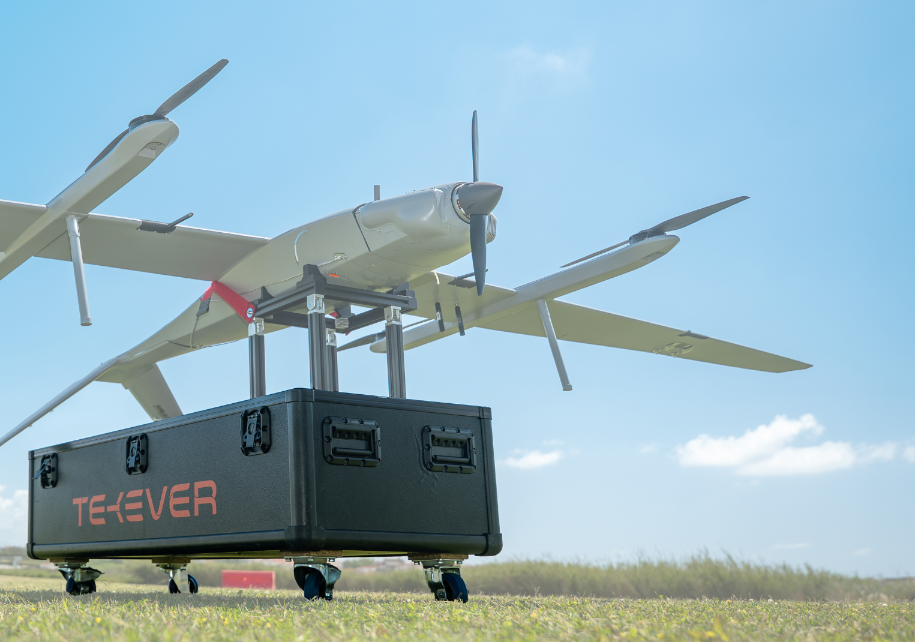
Class III drones are primarily deployed by defence organisations and are often required to remain airborne for extended periods. These systems typically feature larger components, such as wings, fuselage sections, antennas, landing gear and interchangeable payload modules. During transport, it is essential not only to protect against shocks, but also to prevent pressure on long or protruding components.
A custom-made EXOcase™ can be configured to store wings, fuselage sections, payloads and accessories separately. This ensures the system remains optimally protected during transport in vehicles, containers and aircraft.
Transport Protection for Ground Robots and UGV Systems
Uncrewed Ground Systems (UGVs), also referred to as ground robots, are remotely operated and are widely deployed by defence organisations, EOD units and other security services. UGVs are used to safely neutralise explosive devices from a distance, inspect hazardous areas and access locations that are difficult to reach.
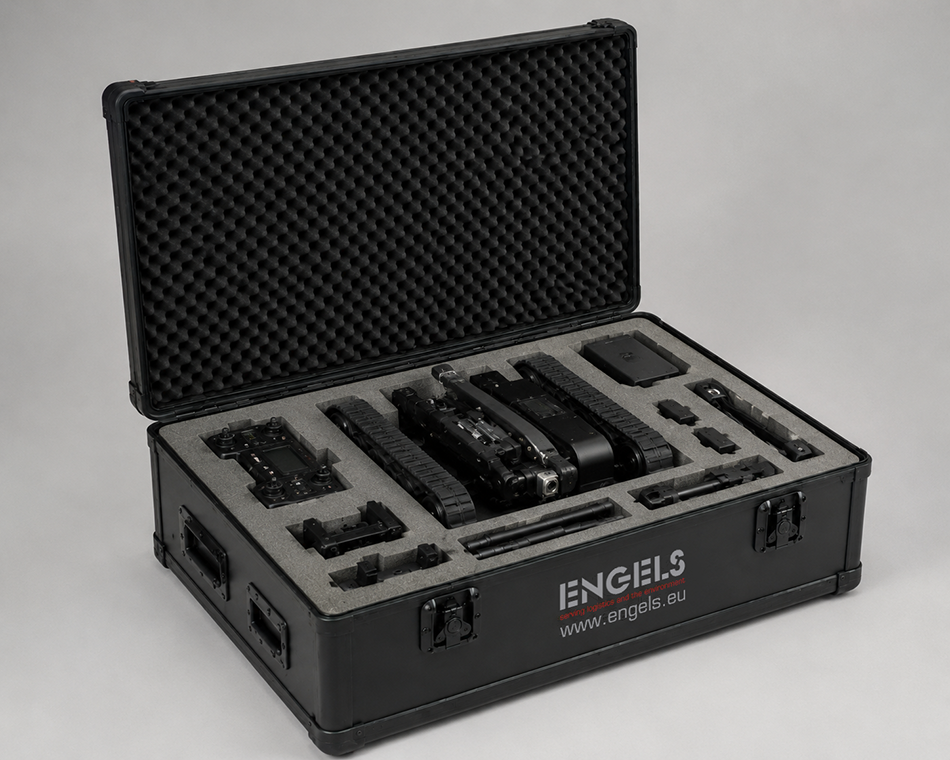
Ground robots place different demands on transport solutions than compact UAV systems. Due to their greater weight and the presence of sensitive components such as sensors, cameras, LiDAR systems, control units and batteries, a standard transport case is often insufficient.
With a custom-made EXOcase™ from Engels, every component is given its own precisely designed position. This minimises shocks and movement during transport, ensuring the complete UGV system remains protected and immediately ready for deployment.
Protection for Maritime Drones, ROVs, AUVs and USVs
Maritime drones are deployed in a variety of environments, both above and below the water surface. For underwater operations, there are two main types: ROVs and AUVs. The difference is that ROVs (Remotely Operated Vehicles) are connected by a cable and controlled by an operator, while AUVs (Autonomous Underwater Vehicles) operate autonomously without a tether. USVs (Uncrewed Surface Vehicles) are small surface vessels that also operate autonomously or can be remotely controlled.
These three types of maritime drones are widely used for the inspection of ports, offshore installations, ship hulls and defence applications.
For transport, not only the vehicle itself requires protection, but also cables, tether systems, connectors, sonar equipment, underwater cameras, thrusters, seals and control equipment. In maritime environments, moisture, contamination and corrosion also present significant challenges. As every maritime drone has a unique configuration, each requires a custom-made transport solution.
Protection of Sensitive Equipment
In professional drone systems, the payload often represents a significant proportion of the total value. Depending on the application, professional drone kits may include:
LiDAR systems
EO/IR cameras
Thermal cameras
Multispectral cameras
Antennas
Communication systems
Ground Control Stations
Satellite communication equipment
Payloads are highly sensitive to shocks, dust, moisture and incorrect positioning within a transport case. Engels has developed the EXOcase™ and custom-made drone cases specifically to address these challenges. Precisely CNC-machined foam interiors ensure that every component remains securely in place during transport.
Drone Cases Built to Military Standards
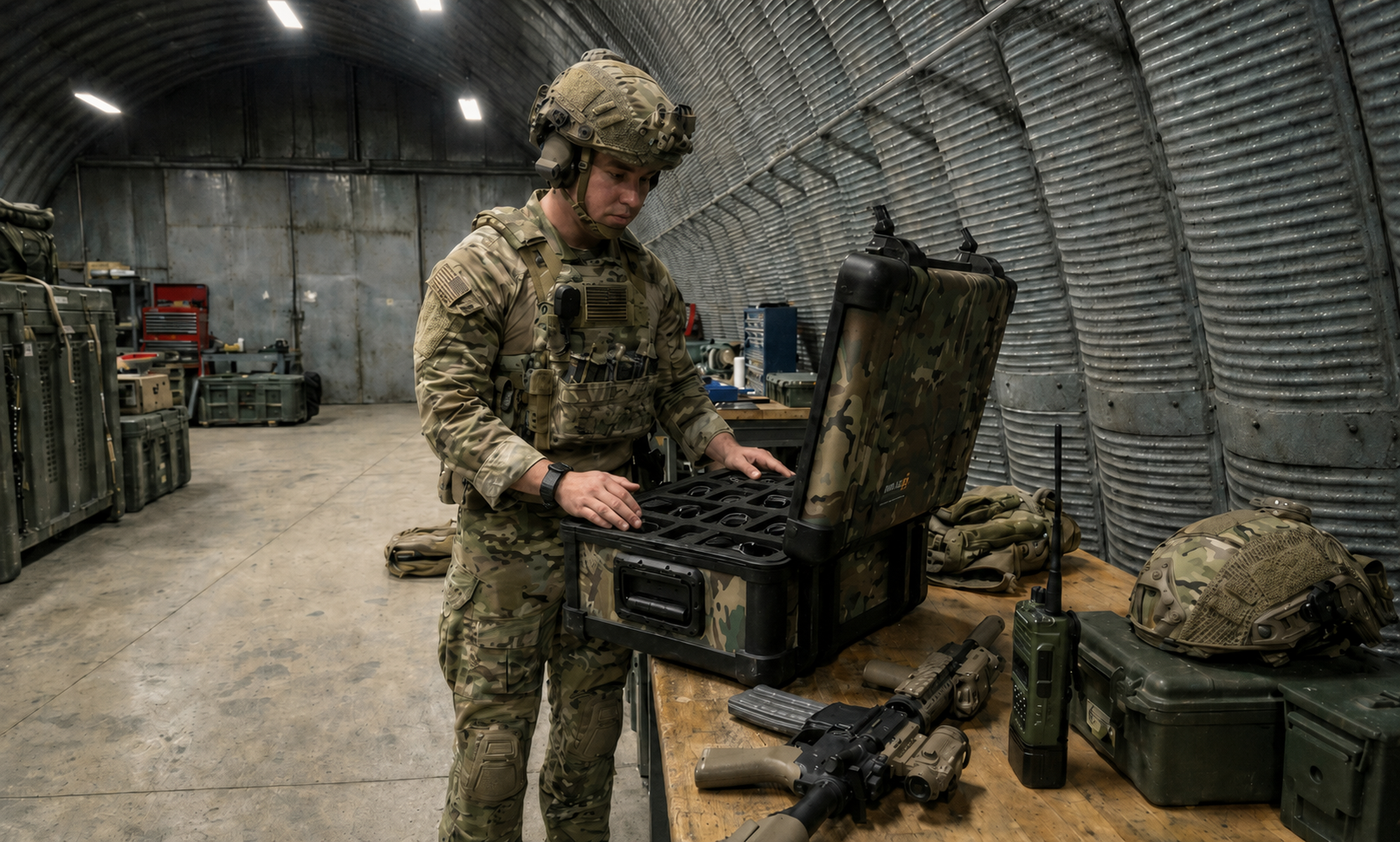
Professional drones and uncrewed systems are often deployed in demanding environments where equipment must withstand shocks, vibrations, dust, moisture and changing weather conditions. For this reason, EXOcase™ transport solutions can be manufactured with protection levels that meet the requirements of defence, security, industry and critical infrastructure.
Depending on the application, EXOcase™ solutions are available with various IP protection ratings, including IP54, IP55, IP56 and IP67. This ensures sensitive equipment is protected against water, dust, rain, splashing water and other environmental influences during transport and storage.
For defence and other high-demand applications, our solutions are developed with due consideration for relevant MIL-SPEC requirements and MIL-STD-810 test methods. This internationally recognised military standard includes testing procedures for shock resistance, vibration, moisture, dust, temperature variations and transport conditions. As a result, these cases are suitable for the safe transport of drones, payloads, sensors, communication equipment and other mission-critical systems.
Frequently Asked Questions About Drone Transport Cases and Custom Cases
1. What should a professional drone transport case provide?
A professional drone transport case should protect drones and their components against shocks, vibrations, dust, moisture and transport damage. For UAVs, UGVs, ROVs and other unmanned systems, a fixed layout, rapid deployment and the protection of sensors, cameras, batteries, controllers and payloads are essential.
For demanding applications, plastic cases, containers and flight cases provide a practical foundation for safe transport and organised storage.
2. Why do drone manufacturers and OEMs choose custom transport solutions?
Drone manufacturers and OEMs often choose custom solutions because every drone configuration is different. A custom case ensures that drones, accessories and technical components each have a dedicated position.
This reduces the risk of transport damage and supports professional delivery to customers, dealers and end users. A custom flight case can be fitted with wheels, compartments, foam interiors or drawers.
3. Which types of drones can be accommodated in a custom case?
Custom drone cases can be developed for aerial, ground and maritime drones, including UAVs, VTOL drones, inspection drones, defence drones, UGV systems, ground robots, ROVs and maritime drones.
Ground Control Stations, communication equipment, sensors and payload modules can also be integrated into the same transport solution.
4. Which protection standards are important for drone transport cases?
Depending on the application, standards and specifications such as IP54, IP67, ATA 300 and MIL-STD-810 may be relevant. IP ratings indicate the level of protection a case provides against dust and water.
MIL-STD-810 is widely used as a reference for testing resistance to shock, vibration, moisture and extreme environmental conditions. The exact specifications depend on the case, configuration and application. See also our shockproof waterproof cases for applications where protection against dust, water and impact is essential.
5. Are drone transport cases suitable for defence and security organisations?
Yes. Custom drone transport cases can be developed for defence, police, fire and rescue services, EOD units, inspection organisations and other security services.
These applications often require robust cases, organised layouts and reliable protection for drones, sensors, batteries, communication equipment and control systems during intensive use. More information can be found on our public services page.
6. Can batteries, chargers and accessories be safely transported in the same case?
Yes. A custom case can be designed to accommodate the complete drone kit. Batteries, chargers, spare parts, propellers, controllers, cameras and documentation can each be assigned their own dedicated compartment.
This provides a clear layout, reliable protection and faster deployment on site. With custom interiors, sensitive components can be securely positioned in foam, textile or other protective materials.
7. What does the design process for a custom drone case involve?
The process begins with an assessment of the drone, accessories, intended application and transport environment. The most suitable case construction and foam interior are then selected.
Once approved, the solution can be manufactured for prototypes, small production runs or larger OEM projects. The result is a transport solution designed for practical use, from storage and internal transport through to professional delivery.